
Nagaland Police’s operational strength is organised into Armed (NAP) Battalions, India Reserve (IR) Battalions, the District Executive Force, and a range of specialised wings. Each unit carries its own crest, motto and history — built up over decades of service, and in several cases, forged in the insurgency years of the 1960s to 1980s out of Village Guard units, surrendered underground cadres, and personnel absorbed from the Assam Rifles and Assam Police.
A few units stand out for the milestones they’ve reached:
Raised on 1 April 1964 at the peak of Nagaland’s armed insurgency, the 1st NAP Battalion was built from 113 surrendered underground cadres under SS Brigadier Kaming Yimchunger, later joined by another 92 under SS Brigadier Kihoto Sema, along with Village Guard units and personnel from the Assam Rifles and Assam Police. It celebrated its golden jubilee on 1 April 2014, and today stands as the senior-most battalion in the force, guided by its motto — First Among Equals.
Raised on 1 March 1999 at Chakhabama under Shri L. Bendang Lemtur, IPS, the 9th NAP (IR) was Nagaland’s first India Reserve Battalion. Since its first passing-out parade in December 1999, the battalion has trained with Army and Assam Rifles units from across the country and been deployed for law-and-order and counter-insurgency operations throughout the state, including sustained deployment against Naxalites in Chhattisgarh.
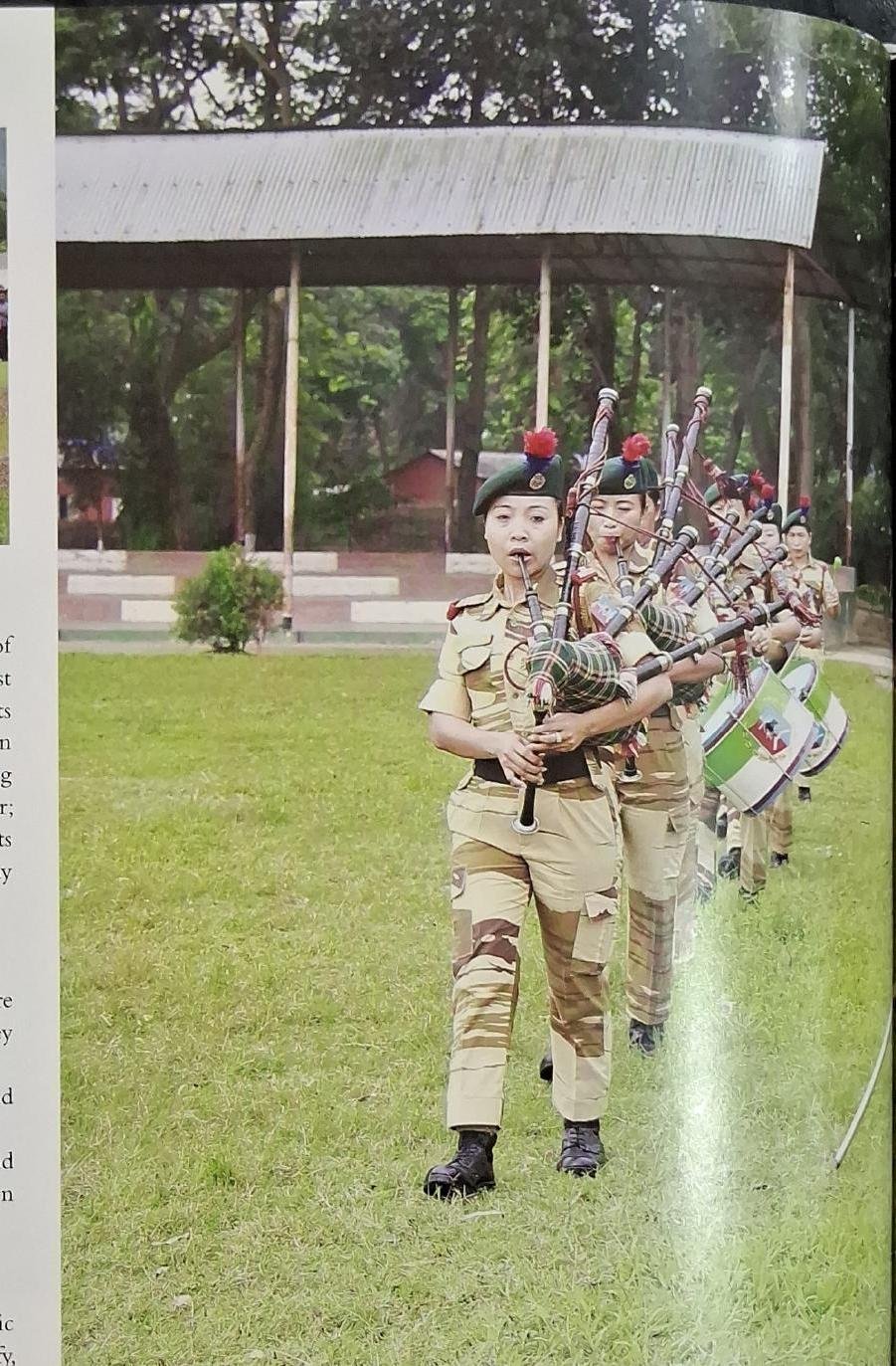
Raised in 2009, the 15th NAP (IR) Mahila Battalion is Nagaland Police’s one and only all-women armed battalion. Its 806 recruits — 82 Havildars and 724 Constables — completed basic and Counter-Insurgency and Jungle Warfare training between 2009 and 2010, and the battalion has gone on to win laurels within and outside the state, including security deployments at the XIX Commonwealth Games in New Delhi (2010), the 12th South Asian Games in Guwahati (2016), and the Rath Yatra in Ahmedabad, Gujarat. It has also won the Champion Trophy in the Drill Competition at the Nagaland Police Duty-cum-Sports and Athletics Meet for five consecutive years, and formed its own Mahila music and pipe bands in 2011–12.
Beyond the armed battalions, the District Executive Force provides everyday policing across Nagaland’s districts, including landmark stations such as Kohima’s North Police Station — established in September 1933 as the first police station in the Naga-inhabited areas under British-era Assam administration — and Kohima’s dedicated Women Police Station, upgraded from a Women’s Cell in 2016 to handle the district’s growing caseload of crimes against women and children
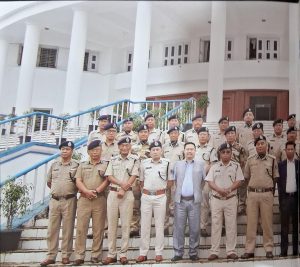
Uniforms identify personnel to the organisation and the public, and the khaki uniform adopted under British administration has continued, with variations, into independent India’s police forces — Nagaland Police included.
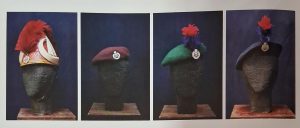
The force’s ceremonial headgear is unique among India’s state police forces — its design, featuring two curved boar tusks and a crest of dyed animal hair, is directly inspired by the traditional ceremonial headgear worn by Naga tribes into battle or in celebration of victory. On the more everyday side, unarmed branch personnel wore the red beret inherited from Assam Police until 1989, when it was replaced by navy blue for gazetted officers and unarmed police, and khaki for the armed battalions. The India Reserve Battalions, raised specifically for counter-insurgency and jungle warfare, wear a distinct green beret suited to that role.
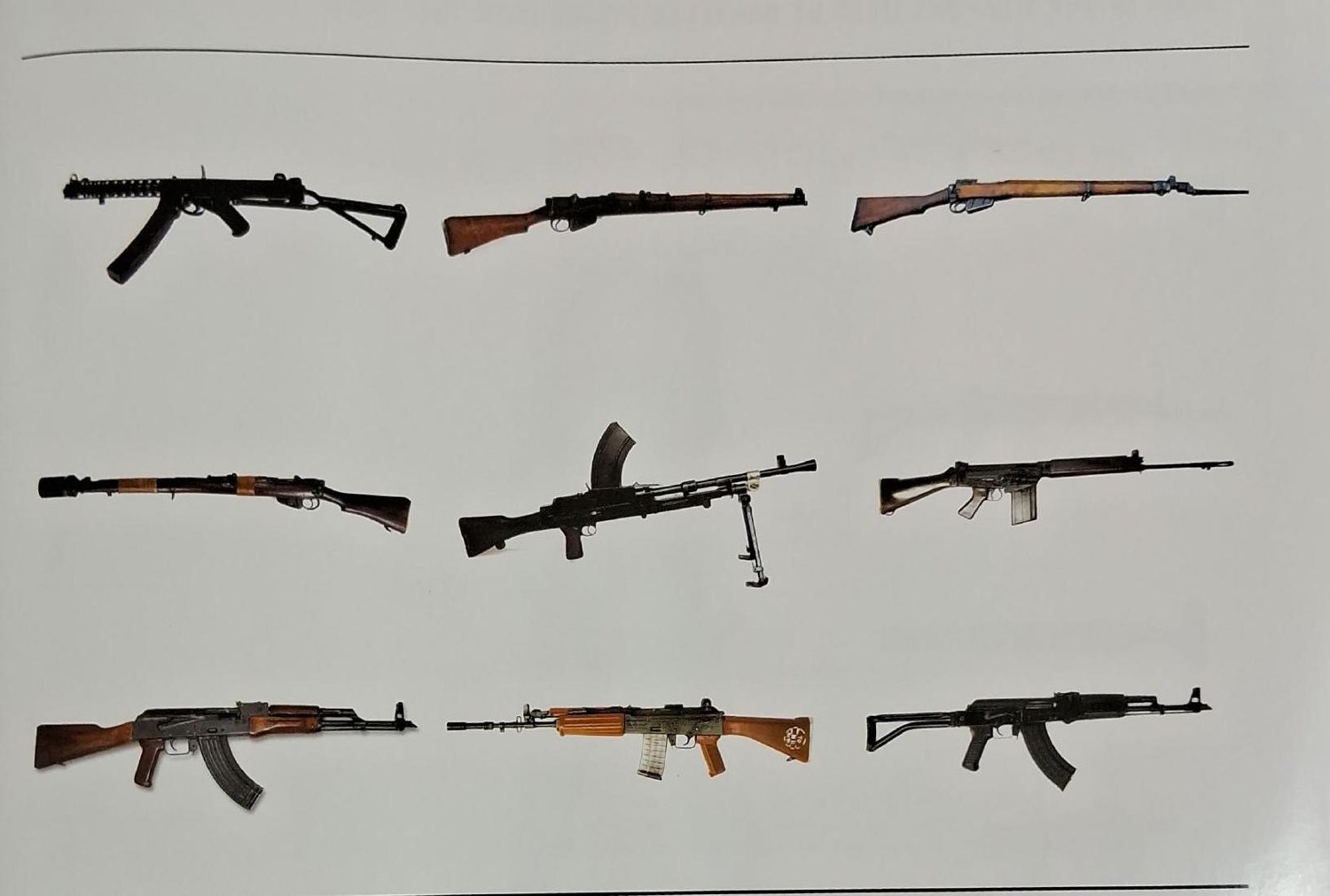
Like other state forces, Nagaland Police was originally equipped mostly with World War II-era weapons inherited from the Indian Army and later Central Ordnance Factories — from the .410 musket and the legendary .303 Lee Enfield rifle to Sten and Thompson submachine guns and a range of revolvers. Weaponry evolved through the decades: the .303 Bren light machine gun and 2-inch mortar came with the raising of the armed battalions; American-origin .45 M3 “Grease Guns” and Thompson submachine guns saw heavy use during the insurgency years of the 1980s; and the 1990s brought the 7.62mm SLR and SAF Carbine as global stocks shifted following the Indian Peace Keeping Force’s experience in Sri Lanka.
Today’s inventory includes 5.56mm INSAS assault rifles and light machine guns, the improved Excalibur assault rifle, 9mm Glock 17 and IOF pistols, Heckler & Koch MP5A5 submachine guns used by specialised units, and support weapons including the 30mm Automatic Grenade Launcher.
The Nagaland Police Risk Insurance Scheme (NPRIS) has, in the force’s own words, “earned a household name” among Nagaland Police families since it came into effect on 1 September 1982. Governed by the NPRIS Rules 1982 and administered by a Governing Body answerable to an Annual General Body meeting, the scheme provides monetary benefits in the event of a subscribing member’s death, and on discharge, dismissal, invalidation or superannuation (except in cases of desertion) — along with broader welfare initiatives spanning education, health, vocational centres, family welfare centres and housing for personnel and their families.